
Drywood Termite Treatment
Professional drywood termite treatment that helps homeowners get rid of these wood-destroying pests, eradicates colonies, and safeguards your house and property from structural damage.
(855) 813-5412
5 Highlights on Drywood Termite Treatment
Whole Structure Fumigation
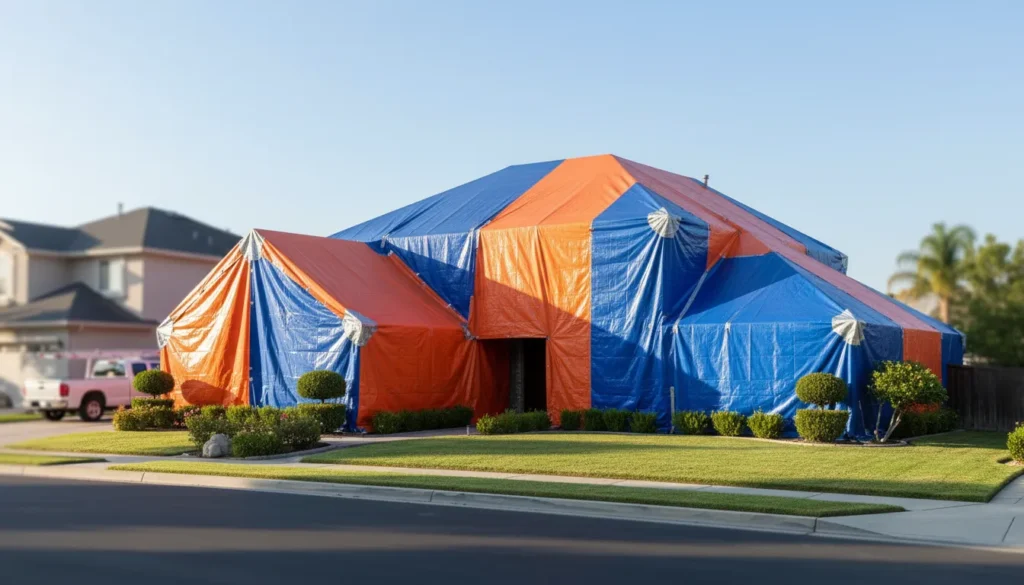
Sterling Pest Control performs full structural fumigation using sulfuryl fluoride (Vikane) to penetrate every gallery, void, and timber member where drywood termite colonies hide. Fumigants work by replacing oxygen inside the sealed structure, preventing the insect colony from being able to breathe. Tarps covering the building remain in place for approximately 24 to 72 hours depending on the severity of the termite infestation. This method eradicates active infestations at every life stage, from worker to queen.
Localized Spot Treatment Options
For contained drywood termite infestations, our certified technicians drill, inject, and apply targeted termiticides like orange oil (D-Limonene) and borate directly into kick out holes and frass deposits. Liquid treatments, foam injections, and heat treatment are all considered effective treatment options. Localized treatment works well when colony activity is limited to a single area, and heat can be used to treat specific room sections without chemicals.
Licensed WDO Inspections
Every drywood termite treatment begins with a thorough wood-destroying organism inspection. Our inspectors use thermal imaging cameras, borescopes, and moisture meters to locate and inspect hidden colonies behind drywall, inside attic rafters, and along fascia boards. We will determine the scope of the problem and document all evidence found during the assessment.
Warranty Backed Service
Sterling Pest Control stands behind every treatment with a written service agreement and renewable warranty. If drywood termites reinfest a treated structure during the coverage period, we retreat at no additional cost. Call our company to get a free estimate and learn more about our warranty program.
Integrated Pest Management Approach
We combine chemical and non-chemical methods under an IPM framework that represents the best approach to long-term termite control. This program will include preventive borate applications on untreated wood, monitoring stations put in place around the perimeter, and corrective fumigation when colony pressure demands it.
Why Choose Our Drywood Termite Treatment
Drywood termite treatment is a specialized service that demands licensed professionals with direct field experience. A professional can help you understand the full scope of an infestation and determine the right treatment option. Sterling Pest Control has built its reputation as a leading control company, delivering reliable, expert-level termite eradication for residential and commercial properties. We take the time to do the job right.
Our technicians hold state pest control board certifications and maintain active licensure for structural fumigation. Each team member completes ongoing training in the latest termiticide formulations, application techniques, and detection equipment still being used in the industry today. We don’t send general exterminators to handle a drywood termite problem. We send qualified fumigators and inspectors who work with these wood-destroying organisms every day.
Sterling Pest Control uses only EPA-registered products. We select termiticides based on the scope of infestation, the construction type, and the treatment goals. A localized colony in a window frame calls for a different approach than a widespread infestation running through attic joists and rafter tails. We consider every factor to determine which wood treatment will deliver better results, and we match the method to the problem.
Our drywood termite treatment comes with transparent pricing, a detailed treatment plan, and a written warranty. There are no hidden fees. You’ll receive a full WDO report documenting the inspection findings, the recommended corrective actions, and the products we’ll apply. We also provide a pest management plan for long-term prevention, because eliminating the existing colony is only half the job when dealing with termite infestations. Keeping drywood termites from colonizing your structure again is the other half. Sterling Pest Control handles both.
Signs You Need Drywood Termite Treatment
Drywood termite treatment becomes necessary when a colony has established itself inside the wood members of your home or building. These insects are cryptic. They live entirely within the timber they consume, causing damage while leaving few visible traces until the problem is well underway. Even experienced homeowners can miss the early warning signs. Knowing what to look for can save you thousands in structural repair costs.
Frass Pellets Below Wood Surfaces:
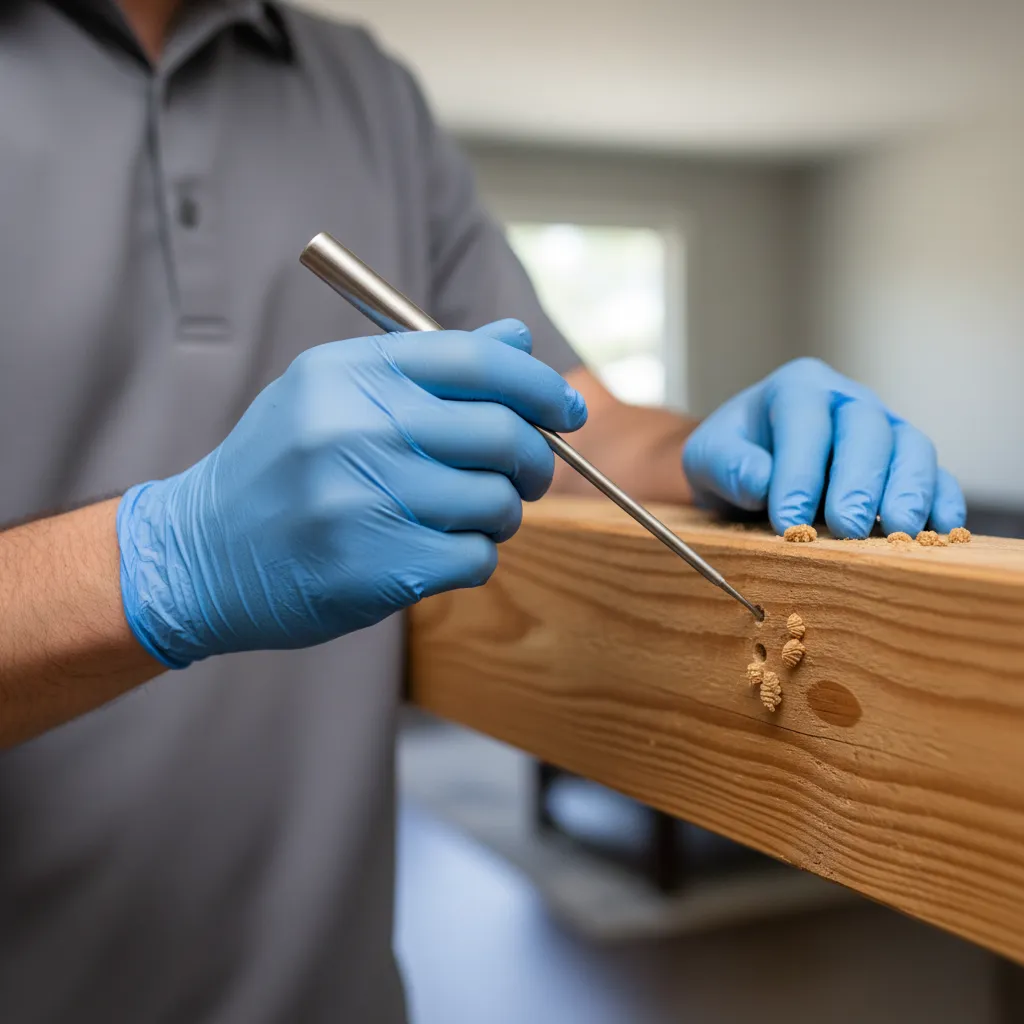
Drywood termites produce small, six-sided fecal pellets that they push out of kick-out holes in infested wood. These pellets accumulate in tiny piles on windowsills, baseboards, and subfloor areas. The pellets are hard, dry, and roughly the size of a grain of sand. Their color can range from light tan to dark brown depending on the wood being consumed. If you find them, an active colony is feeding nearby inside wood members.
Discarded Wings Near Windows and Doors:
Reproductive alates swarm from mature colonies, typically in warm months. After mating, they shed their wings. Finding clusters of translucent, equal-length shed wings near door frames, window frames, or light fixtures signals that a drywood termite colony has reached reproductive maturity inside your structure.
Hollow Sounding Wood:
Tap along exposed joists, studs, rafters, and fascia boards with a screwdriver handle. Drywood termites excavate galleries and tunnel across the grain of the wood, leaving a thin outer shell intact. Infested timber sounds hollow or papery compared to solid, untreated lumber.
Blistering or Darkened Areas on Wood Surfaces:
Galleries that run close to the surface can cause visible blistering on painted or finished wood. You may also notice darkened patches where termite activity has thinned the wood enough to change its appearance. Unlike subterranean termites, drywood termites do not need water or soil contact. Decks, eaves, sill plates, and other exposed parts of the structure are common locations.
Visible Swarmers Inside the Structure:
Seeing live winged termites indoors is a definitive sign. Drywood termite swarmers are tan to dark brown, roughly half an inch long, and attracted to light. A swarm event inside your home means the colony nest is established within the structure itself, not arriving from outside. Once a termite infestation is confirmed, contact a professional pest control operator immediately for an inspection and treatment assessment.
Our Drywood Termite Treatment Process
Drywood termite treatment at Sterling Pest Control follows a structured, step-by-step protocol designed to detect, treat, eradicate, and prevent reinfestation.
Comprehensive Inspection
A certified inspector examines the entire structure, room by room. We probe exposed wood members, check attic spaces and crawl spaces, and scan walls with thermal imaging cameras and acoustic emission detectors. Every finding goes into a detailed WDO report with photographs, diagrams, and severity ratings.
Treatment Plan Development
Based on the inspection report, we build a customized treatment plan. This plan specifies whether the infestation requires whole structure fumigation, localized spot treatment, or a combination of both, depending on the severity. We recommend the most effective approach for your situation. It lists every product we’ll use, the application method, and the expected timeline.
Preparation and Treatment
For structural fumigation, we tent the building by covering it with sealed tarpaulins and introduce sulfuryl fluoride gas at calculated concentrations. The fumigant penetrates every gallery and void, reaching termites at the cell level to eliminate the entire colony. For spot treatments, our technicians drill into infested wood and inject termiticide, apply borate foam into wall cavities, or dust accessible galleries with residual insecticide. Borate compounds work when termites ingest the treated wood fibers.
Ventilation and Clearance
After fumigation, the structure is aerated and we monitor gas levels with calibrated detection equipment. Fans create air flow to help the fumigant disperse and be removed from the building. We do not clear the building for reentry until readings confirm the space is safe. Our fumigator certifies the clearance in writing.
Follow Up Monitoring and Prevention
We install monitoring stations at susceptible entry points, apply preventive borate treatments to remaining untreated wood, and schedule follow-up inspections per the warranty terms. This ongoing pest management plan reduces the risk of reinfestation and helps your structure become protected for the long term.
Brands We Use
Drywood termite treatment requires professional grade products that are proven effective against wood destroying organisms. Sterling Pest Control selects only trusted, EPA registered brands for every application.







Every product we apply meets strict safety and regulatory standards. Our technicians follow all label directions, wear appropriate protective equipment, and ensure your family, pets, and property remain safe throughout the treatment process.
Other Services
Drywood termite treatment
Drywood termite extermination
Frass pellets termite signs
Drywood termite fumigation
Whole structure termite fumigation
Sulfuryl fluoride Vikane treatment
Drywood termite inspection
WDO inspection report
Thermal imaging termite detection
Drywood termite spot treatment
Localized termite treatment
Orange oil borate injection
Drywood termite control
Drywood termite prevention
Wood destroying organism remediation
FAQs About Drywood Termite Treatment
What is drywood termite treatment?
Drywood termite treatment is the process of eradicating drywood termite colonies from structural wood using fumigation, spot treatment, or a combination of both methods. These approaches will be used to target termites that live entirely inside the timber they infest, without needing contact with soil or external moisture.
When should I schedule a drywood termite inspection?
Schedule an inspection when you notice frass pellets, discarded swarmer wings, hollow sounding wood, or visible termites indoors. Annual inspections are also recommended for homes in coastal regions and areas with high drywood termite pressure, especially if the structure contains untreated lumber or has a history of infestation.
Why is fumigation sometimes necessary instead of spot treatment?
Fumigation is necessary when drywood termite colonies have spread to multiple, inaccessible areas within the structure. Spot treatment works for isolated, detectable infestations. Unlike subterranean termites that travel through soil, drywood termites can be hidden deep inside walls, attic framing, or between floors. When colonies are in these locations, only a gas fumigant like Vikane can penetrate every gallery and eliminate the entire population. A professional can help you choose the right method.
How long does structural fumigation take?
Most residential fumigations require two to three days. You’ll need to prepare the structure and vacate during treatment and ventilation. Sterling Pest Control handles all tenting, sealing, gas introduction by releasing the fumigant, aeration, and clearance certification before you return. Once the process is completed, you will receive written documentation.
Can drywood termites come back after treatment?
Yes. Reinfestation can occur if new swarmers enter the structure through untreated wood or gaps. Lack of preventive measures is a leading cause of recurring problems. That’s why Sterling Pest Control includes preventive borate applications, monitoring stations, and scheduled follow-up inspections in every service agreement. We can also help you remove damaged wood and advise on replacing compromised members. Our warranty covers retreatment if drywood termites reinfest during the coverage period at no additional rate.
Does drywood termite treatment damage my home or belongings?
Sulfuryl fluoride does not leave residue on surfaces, fabrics, or food packaging when applied according to label directions, and published studies confirm it does not create lasting damage. The fumigant has no long-term effect on household materials. Spot treatments with borate, orange oil, or injectable termiticide are applied directly into infested wood and do not affect surrounding finishes. Our technicians take every precaution to protect your property throughout the process.
Ready to Get Rid of Pests?
Contact Sterling Pest Control today for a free inspection and estimate. Our expert team is standing by 24/7 to help protect your home.