
Termite Bait Station Installation
Professional in-ground and above-ground bait station placement to detect, intercept, and eliminate subterranean termite colonies around your home or commercial building
(855) 813-5412

5 Highlights on Termite Bait Station Installation
Integrated pest management approach
Sterling Pest Control uses IPM strategies that combine inspection, exclusion, baiting, and targeted treatment to eliminate infestations at the source. We don’t just spray and pray. We identify breeding sites, seal entry points, and monitor results with follow up visits. Our knowledge and expertise help us deliver long-term protection for your family.
Continuous 24/7 monitoring
In-ground monitoring stations placed every 10 to 15 feet around your foundation intercept subterranean termites as they tunnel through soil, giving our certified technicians early detection before structural damage can impact floor joists, sill plates, or rim joists.
Non-repellent, targeted approach
Bait matrix cartridges contain cellulose-based material that worker termites consume and transfer back to the queen, soldiers, and reproductives through trophallaxis — a slow-acting but colony-eliminating method that won’t alert the colony to scatter.
Low-toxicity and pet-safe
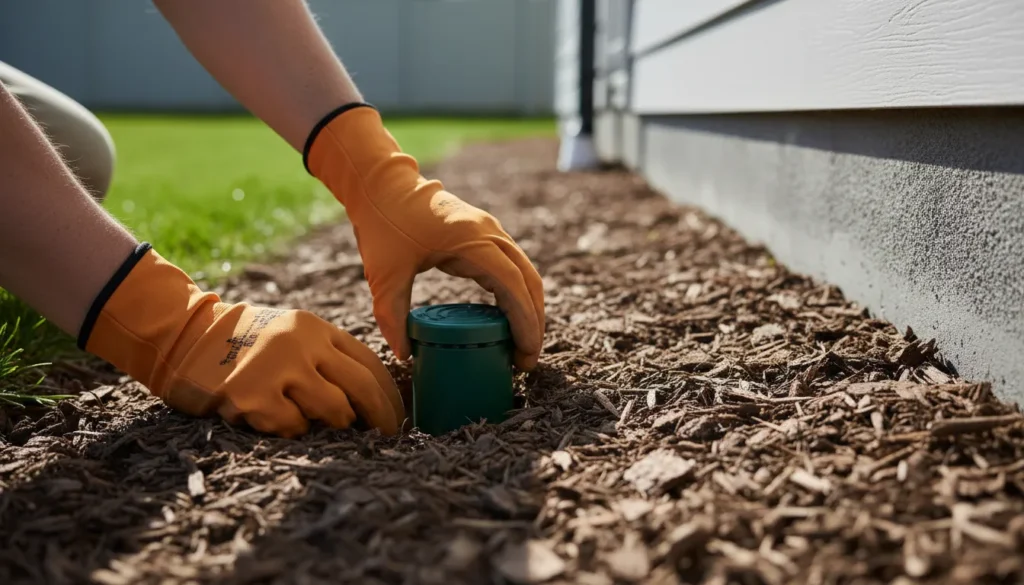
Bait stations sit flush with the soil line in tamper-resistant housings, keeping active ingredients and chemicals contained and sealed below grade and away from children, pets, and non-target organisms in your landscaping beds and yard.
Warranted protection with annual renewal
Every termite bait station installation from Sterling Pest Control includes a termite bond with retreatment warranty, backed by scheduled quarterly service visits and documented inspection reports for your records.
Why Choose Our Termite Bait Station Installation
Termite bait station installation is a specialized service that demands licensed, trained professionals who understand termite biology, soil conditions, and structural vulnerabilities. Knowing what to look for is essential, and working with key indicators of infestation requires experience. Sterling Pest Control employs certified pest management professionals with direct field experience identifying subterranean termite activity, Formosan termite colonies, and conducive conditions like earth-to-wood contact and moisture-laden crawl spaces.
We don’t guess. We probe. We inspect. We assess your foundation type – whether you’ve got a monolithic slab, pier-and-beam construction, or a stem wall with crawl space – and we design a station layout specific to your property’s risk profile. Every placement accounts for plumbing penetrations, expansion joints, bath traps, and utility entry points where termites commonly breach the structure. We also locate and call out gas lines and water lines before any digging begins.
Our technicians carry state licensure through the structural pest control board and follow integrated pest management protocols that meet EPA guidelines. Properties with limited access or difficult terrain require extra coordination, and we work in the proper order to cover every entry point. We document every station location, every bait check, and every sign of termite feeding activity in a detailed service report you can use for real estate transactions, disclosure requirements, or termite clearance letters.
Sterling Pest Control backs every bait station installation with a written termite warranty. That warranty covers retreatment at no additional cost if termite activity returns during the coverage period. We also offer damage warranty options and annual renewal plans that help you maintain protection, keep your stations serviced, your bait cartridges replenished, and your property defended year-round.
Signs You Need Termite Bait Station Installation
Termite bait station installation is the right move when your property shows any of these five warning signs — or when you want to prevent them from ever appearing.
Mud tubes on your foundation walls:
Subterranean termites build shelter tubes from soil, saliva, and fecal matter to travel between their underground colony and your structure. These pencil-width tunnels running up your stem wall, along your footing, or inside your crawl space confirm active termite migration. Bait stations intercept foragers in the soil before they reach your foundation.
Swarmers inside your home:
Winged reproductive termites — alates — emerging from baseboards, window frames, or light fixtures between March and June signal a mature colony nearby. A single colony can contain hundreds of thousands of workers already feeding on your framing. Bait stations target that colony underground and eliminate it.
Hollow or weakened wood:
Tap your sill plate, floor joists, or subfloor with a screwdriver or probing tool. If the wood sounds hollow, feels soft, or crumbles under light pressure, termites have been gnawing through the cellulose and lignin inside. This kind of concealed damage in load-bearing members compromises your structure’s integrity.
Conducive conditions around your property:
Wood-to-soil contact at fence posts, landscaping timbers, deck supports, or woodpiles stacked against your house creates direct pathways for termite entry. Tree stumps, exposed tree roots, and debris on the soil surface also attract termites. Poor drainage, missing vapor barriers, and clogged gutters add moisture that subterranean termites need to survive. If you find any of these conditions around your property, bait stations create a monitored detection ring around these vulnerable areas.
A neighbor's termite treatment:
Termite colonies forage across property lines. When a neighboring home gets treated with a repellent chemical barrier, displaced termites migrate laterally through the soil — straight toward untreated structures. Installing bait stations around your perimeter catches those colonies before they colonize your foundation.
Our Termite Bait Station Installation Process
Termite bait station installation at Sterling Pest Control follows a structured, repeatable process designed for thorough coverage and long-term colony control.
Property inspection and assessment
A licensed inspector evaluates your entire structure – crawl space, slab edges, basement walls, attic framing, eaves, exterior foundation, and all accessible wood members. We use moisture meters, probing tools, and flashlights to detect active termite feeding, mud tubes, frass, and conducive conditions in both wet and dry areas. We also check below-grade areas, plumbing penetrations, and expansion joints.
Station layout design
Based on your foundation type, soil conditions, and risk areas, we map station placement at intervals of 10 to 15 feet around the full perimeter. Clay soils and compacted areas along driveways, patios, and the slab edge may require adjusted spacing. High-risk zones near bath traps, HVAC penetrations, garage slabs, and areas with prior termite activity receive closer spacing.
Station installation
Our technicians use drilling equipment with an auger bit or core drilling attachment to create each hole at the correct depth and diameter for the station housing. After drilling, we clean out loose soil and debris from the drilled cavity to ensure a proper fit. We then place and embed the in-ground station housing flush with grade level and insert monitoring cartridges containing a cellulose matrix. Above-ground stations get placed directly on active mud tubes or known feeding sites when present.
Initial monitoring and bait activation
We return within 30 days to inspect every station for termite feeding activity. When monitors show hits, our technicians wear gloves for handling bait cartridges and remove the monitoring units by hand, swapping in active bait cartridges loaded with a chitin synthesis inhibitor. Worker termites consume the bait, transfer it through the colony, and the growth regulator prevents successful molting – collapsing the colony over weeks.
Ongoing quarterly service
Every 90 days, a Sterling technician inspects all stations, documents activity levels, replenishes bait cartridges, and reports findings. We keep the top of each station clean and free of debris, ensuring the job is done right each visit. This scheduled maintenance keeps your termite bond active and your warranty valid.

Brands We Use
Termite bait station installation relies on proven, registered products from manufacturers with decades of field-tested performance. Sterling Pest Control installs and services stations from these trusted brands:






All products we apply carry EPA registration, and our technicians follow label directions precisely.
Other Services
Termite bait station installation
Install termite bait stations
In-ground termite monitoring system
Termite bait station service
Professional bait station placement
Subterranean termite colony elimination
Termite baiting system
Termite interception stations
Chitin inhibitor bait cartridge
Termite monitoring stations
Below-grade termite stations
Cellulose matrix termite bait
Termite bait station cost
Affordable termite bait installation
Annual termite bait station maintenance
FAQs About Termite Bait Station Installation
What is termite bait station installation?
Termite bait station installation is the process of embedding in-ground monitoring and baiting devices around your property’s perimeter to intercept foraging subterranean termites. Installing termite bait stations in the correct locations is critical for success. Each station contains a cellulose matrix – similar in composition to cardboard or paper – that attracts worker termites. Some homeowners notice termites wrapping around the bait material as they feed. Once feeding activity is detected, active bait cartridges with a chitin synthesis inhibitor replace the monitors, and workers carry the slow-acting toxicant back to the colony – eliminating the queen, soldiers, and reproductives over several weeks.
When should I install termite bait stations?
Bait stations can be installed any time of year. The best time is before you see signs of termite activity — as a preventive measure. If you’re buying a home, closing on a real estate transaction, or your WDI report flagged conducive conditions, installing stations now gives you documented, warranted protection from day one.
How do bait stations differ from liquid soil treatments?
Liquid termiticide barriers like Termidor create a treated zone in the soil that kills or repels termites on contact. Bait stations take a different approach — they lure termites to feed on a growth regulator that collapses the entire colony. Many pest management professionals recommend combining both methods for comprehensive coverage, especially on properties with active infestations and high-risk conducive conditions.
Can termite bait stations protect a slab foundation?
Yes. Bait stations work well around concrete slab foundations where trenching for liquid treatment can be difficult near plumbing penetrations, expansion joints, and attached garages. Stations sit in the soil around the slab perimeter and intercept termites before they enter through cracks or gaps in the concrete.
How often does Sterling Pest Control service the stations?
We inspect and service every station on a quarterly schedule — every 90 days. During each visit, our technician checks for termite feeding, replaces consumed bait cartridges, documents station conditions, and reports any new conducive conditions. This routine maintenance keeps your termite warranty active and your property protected.
Does a termite bait station installation come with a warranty?
Every bait station installation from Sterling Pest Control includes a written termite bond with a retreatment warranty. If termite activity returns at any monitored station during your coverage period, we retreat at no charge. We also offer damage warranty upgrades and annual renewal options that extend your coverage indefinitely.
Ready to Get Rid of Pests?
Contact Sterling Pest Control today for a free inspection and estimate. Our expert team is standing by 24/7 to help protect your home.