Wildlife Removal
Professional wildlife removal services and control services that safely capture, relocate, and exclude common nuisance animals from your property.
(855) 813-5412
5 Highlights on Wildlife Removal
Licensed Wildlife Control Operators
Sterling Pest Control employs certified wildlife removal specialists who hold state permits to trap, relocate, and exclude protected and nuisance wildlife from residential and commercial properties across the region.
Humane Capture and Relocation
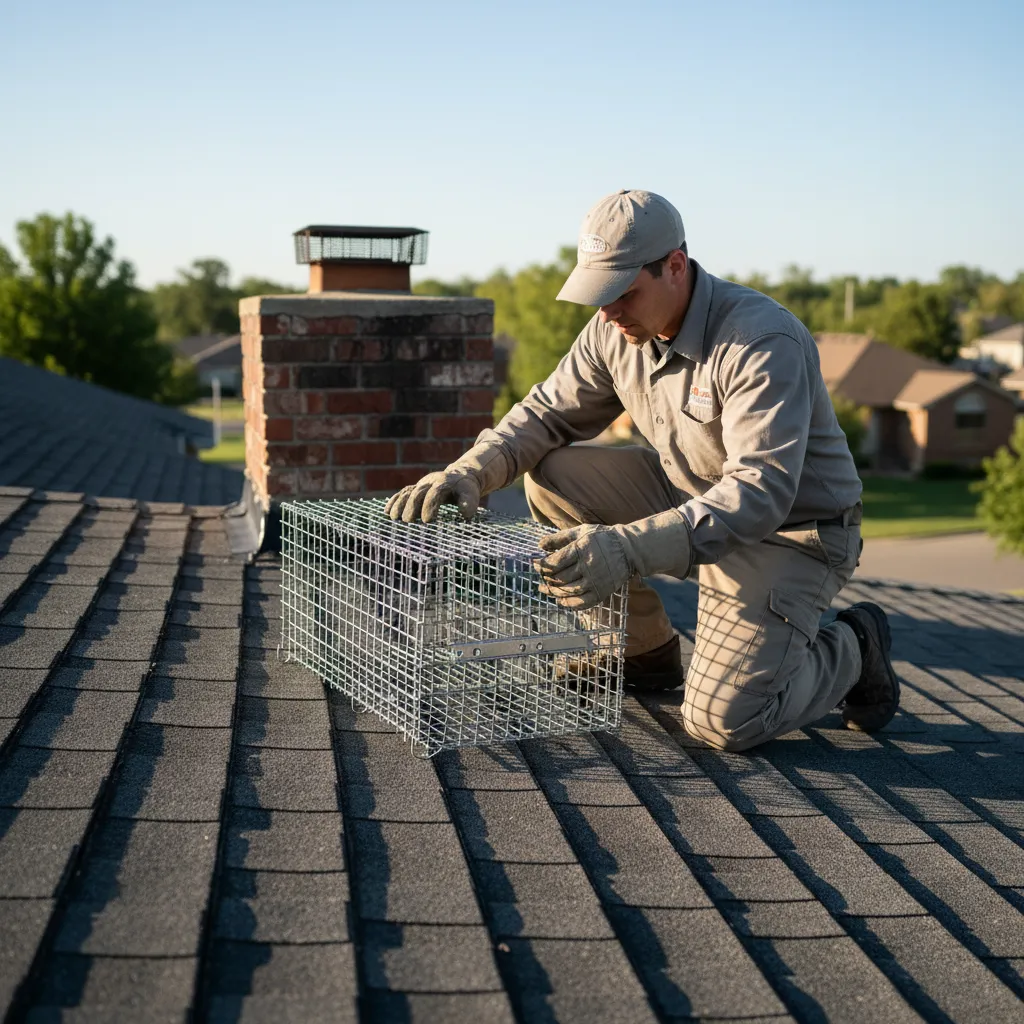
Our trappers use live traps, cage traps, and one-way doors to capture raccoons, squirrels, opossums, bats, and snakes without lethal methods, then release them in approved relocation zones far from your home.
Full Exclusion and Seal-Out Services
After we remove wildlife, our technicians seal entry points along your foundation, soffit, fascia, eaves, and chimney caps with professional-grade mesh, sealant, and vent covers to prevent re-entry.
Attic and Crawl Space Restoration
We sanitize and decontaminate areas damaged by droppings, guano, urine, and nesting materials, reducing your exposure to zoonotic pathogens like histoplasmosis, hantavirus, and leptospirosis. Our team also provides damage repair services to restore insulation and repair chewed wiring or structural components.
24/7 Emergency Wildlife Response
Aggressive or rabid animals don’t wait for business hours. Sterling Pest Control dispatches a wildlife removal specialist to your property day or night for urgent situations involving venomous snakes, bats, coyotes, or feral animals.
Why Choose Our Wildlife Removal
Wildlife removal is a regulated service that demands proper licensing, species identification skills, and hands-on field experience. As a full-service pest control company, Sterling Pest Control brings all three to every call. We specialize in humane trapping and exclusion, and we operate across residential and commercial properties nationwide.
Our wildlife removal specialists carry active wildlife control operator permits and follow all EPA and state regulations governing the trapping, handling, and relocation of nuisance wildlife. We don’t cut corners. Every raccoon, bat, squirrel, and snake we encounter gets identified, assessed, and handled according to species-specific protocols. Protected and migratory animals receive the careful treatment the law requires.
We stand apart from general pest control companies because wildlife removal is a core service – not an afterthought. As a dedicated wildlife control company, our technicians train specifically in animal behavior, entry point identification, and structural exclusion. They know where opossums den under decks, how bats colonize attics through half-inch gaps in soffit panels, and why squirrels gnaw through fascia boards each fall.
Sterling Pest Control backs every wildlife removal job with a written exclusion guarantee. If an animal re-enters through a sealed entry point during your warranty period, we return at no charge to trap, remove, and re-seal the area. Our service contracts include a detailed inspection report, a treatment plan tailored to your property, and follow-up monitoring with a technician visit to confirm the problem stays resolved.
Trusted, qualified, and fully insured — that’s the Sterling standard for professional wildlife removal.
Signs You Need Wildlife Removal
Wildlife removal becomes necessary the moment wild animals establish themselves inside or around your structure. Here are five signs that you’re dealing with an active wildlife problem.
Scratching, Thumping, or Scurrying Sounds in Walls and Ceilings:
Nocturnal animals like raccoons, squirrels, and rats create audible noise after dark. Scratching inside wall cavities often points to rodents gnawing through insulation and wiring – a clear sign you need rodent control. Heavy thumping in the attic typically signals a larger animal – a raccoon or opossum – that has nested above your living space. Whether the culprit is a single rodent or a family of squirrels, these sounds mean an animal has already breached your structure and needs professional removal.
Droppings, Guano, or Urine Stains in the Attic or Crawl Space:
Animal droppings are a direct indicator of an active infestation. Bat guano accumulates in cone-shaped piles beneath roosting sites. Raccoon droppings appear in concentrated latrine areas. Squirrel feces scatter along travel paths near entry points. Each type carries zoonotic risks including histoplasmosis, leptospirosis, and salmonella, making prompt wildlife removal and decontamination a health priority.
Visible Damage to Soffit, Fascia, Roof Vents, or Foundation Screens:
Wildlife chew, claw, and pry their way into buildings. Squirrels gnaw through wooden fascia boards. Raccoons rip open soffit panels with their front paws. Armadillos burrow under foundations. Any visible structural damage near your roofline, eaves, or crawl space vents suggests an animal has created or widened an entry point.
Foul Odors from Walls, Attics, or Beneath the Structure:
A persistent, sharp smell often means an animal has died inside a wall void, attic, or crawl space. Decomposing wildlife produces an unmistakable odor that intensifies over days. Accumulated urine from a raccoon den or bat colony also generates strong ammonia-like smells that seep into living areas.
Daytime Sightings of Nocturnal Animals on Your Property:
Raccoons, skunks, opossums, and bats are nocturnal by nature. Seeing them active during daylight hours can indicate illness, displacement from a nearby den, or territorial pressure from overpopulation. A rabid or diseased animal poses a direct safety threat and requires immediate professional wildlife removal.
Our Wildlife Removal Process
Wildlife removal is a structured, multi-step service designed to resolve your animal problem permanently — not just temporarily.
Comprehensive Property Inspection
A licensed wildlife removal specialist surveys your entire property, inside and out. We inspect the attic, crawl space, basement, roofline, foundation, eaves, soffit, fascia, chimney, and all vent covers. We identify the species, locate entry points, assess structural damage, and document droppings, nesting materials, and harborage areas. You receive a written inspection report detailing every finding.
Species Identification and Treatment Plan
We diagnose the specific wildlife species involved — raccoon, squirrel, bat, snake, opossum, skunk, or other nuisance animal — and build a treatment plan around that animal’s behavior, biology, and legal status. Protected and migratory species require specific handling protocols that our certified team follows precisely.
Trapping, Capture, and Removal
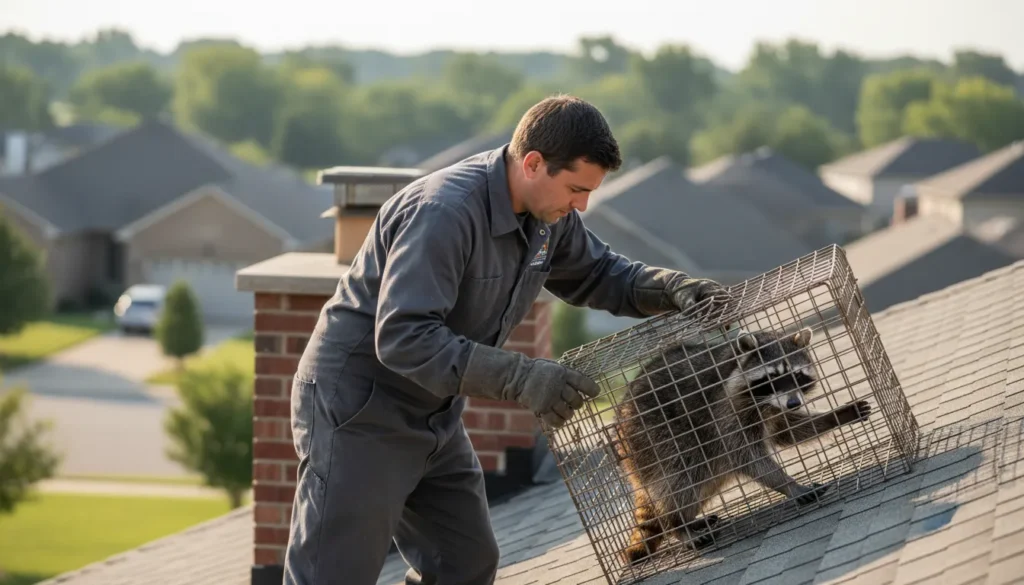
Our trappers set live traps, cage traps, snares, or one-way exclusion devices based on the species and situation. We monitor all traps daily, capture the target animals, and remove them from your property. Venomous snakes and aggressive wildlife get handled with specialized equipment by experienced technicians.
Exclusion and Structural Seal-Out
After removal, we seal every entry point with commercial-grade mesh, metal flashing, sealant, chimney caps, vent covers, and screening. This exclusion work prevents future wildlife from re-entering the same vulnerable areas.
Sanitization, Decontamination, and Monitoring
We sanitize contaminated attics, crawl spaces, and wall voids by removing droppings, guano, soiled insulation, and nesting debris. We decontaminate surfaces to neutralize pathogens. Follow-up monitoring confirms the exclusion holds and no new animal activity develops.
Brands We Use
Wildlife removal requires professional-grade equipment and products built for safe, effective animal control. Sterling Pest Control uses only top-rated, industry-trusted brands on every job.

Every product we use meets EPA guidelines and state regulatory standards. Our technicians follow all label instructions and safety data sheets to protect your family, pets, and property during the wildlife removal process.
Other Services
Wildlife removal
Wildlife removal services
Nuisance wildlife control
Animal removal service
Wild animal removal
Humane animal trapping
Raccoon removal
Raccoon trapping service
Attic raccoon removal
Bat removal
Bat exclusion service
Bat colony removal from attic
Squirrel removal
Squirrel trapping
Squirrel in attic removal
FAQs About Wildlife Removal
What does wildlife removal include?
Wildlife removal includes a full property inspection, species identification, trapping or capture, physical removal of the animal, structural exclusion to seal entry points, and sanitization of contaminated areas. Explore our services on this page to learn more. Sterling Pest Control provides a written treatment plan and inspection report with every service call so you know exactly what we found and how we’ll resolve it.
When should I call a wildlife removal specialist?
Call or email us as soon as you hear scratching or thumping in your attic, walls, or crawl space. Contact us immediately if you spot a bat inside your home, find a snake in your garage, or notice droppings in your attic. Daytime sightings of nocturnal animals like raccoons or skunks also warrant a prompt call – the animal may be rabid or diseased.
Why can't I remove wildlife myself?
Many wildlife species are regulated, protected, or migratory under state and federal law. Trapping or relocating them without a permit can result in fines. Raccoons, bats, and skunks also carry rabies, histoplasmosis, and leptospirosis. A licensed wildlife removal specialist has the permits, training, and equipment to handle these animals safely and legally.
How does exclusion prevent wildlife from returning?
Exclusion works by physically sealing every gap, hole, crack, and opening that wildlife used to enter your structure. Our technicians install metal mesh, sealant, chimney caps, vent covers, and screening over vulnerable areas. Without an accessible entry point, animals cannot re-enter — even determined chewers like squirrels and rats get stopped by commercial-grade exclusion materials.
Can Sterling Pest Control remove bats from my attic?
Yes. We perform full bat exclusion using one-way doors and exclusion devices that allow the colony to exit naturally without re-entry. We time bat removal around maternity season regulations to comply with state wildlife laws. After the colony vacates, we seal all entry points and decontaminate the attic by removing guano and treating surfaces for histoplasmosis spores.
Does wildlife removal come with a guarantee?
Sterling Pest Control guarantees every exclusion seal-out. If a wild animal re-enters through a point we sealed during your warranty period, we return at no cost to trap, remove, and re-seal the area.
Ready to Get Rid of Pests?
Contact Sterling Pest Control today for a free inspection and estimate. Our expert team is standing by 24/7 to help protect your home.