
Carpenter Ant Treatment
Professional carpenter ant treatment that eliminates active colonies and prevents structural damage to your property. Our expert exterminators help you get rid of pests and ensure your home remains pest-free.
(855) 813-5412
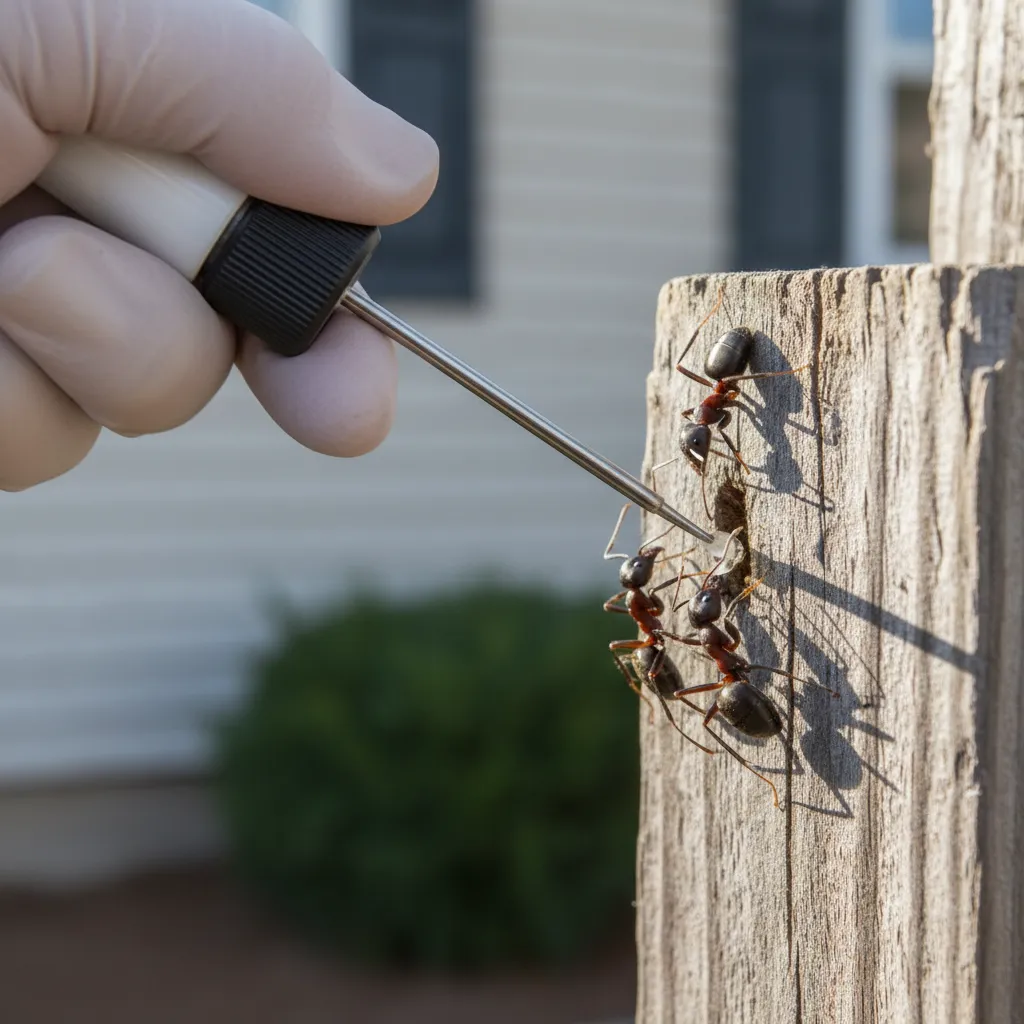
5 Highlights on Carpenter Ant Treatment
Licensed technicians inspect every structure
using moisture meters and visual detection methods to locate parent colonies, satellite colonies, and active gallery systems hidden inside wall cavities, joists, and sill plates.
Non-repellent insecticides penetrate deep
into nesting sites where carpenter ants colonize, reaching the queen and brood without alerting foraging workers to scatter and form new satellite colonies elsewhere in your home.
Integrated pest management drives our approach
We combine bait gel applications, dust formulations injected into voids, and perimeter barrier treatments to eradicate infestations at every stage from egg to adult. Our comprehensive pest control approach uses baits and sprays to kill pests while keeping your family safe.
Wood-destroying ant damage stops fast
Sterling Pest Control’s carpenter ant treatment targets the galleries and tunnels these insects excavate through structural timber, decking, subfloor material, and moisture-damaged wood.
Recurring monitoring and follow-up visits
are included with every service contract. Our certified inspectors return to verify colony elimination, check bait stations, and seal new entry points before reinfestation can take hold.
Why Choose Our Carpenter Ant Treatment
Carpenter ant treatment is a specialized control service that demands precise identification, targeted product application, and structural knowledge most general pest companies lack. Sterling Pest Control has built its reputation on exactly this kind of focused expertise. When you encounter a pest issue, you need a team that can handle it with a comprehensive approach.
Our technicians hold current state licensure and carry certifications in wood-destroying organism inspection. They don’t guess. They identify carpenter ant species on sight, distinguish frass from termite debris, and trace ant trails back to the parent nest using pheromone behavior patterns. Unlike termites that consume wood for food, carpenter ants excavate galleries to establish their colony. That level of training makes the difference between a treatment that works once and a callback that costs you twice.
We stand behind every carpenter ant treatment with a written warranty. If activity returns within the coverage period, we retreat at no charge. Our service contracts include scheduled follow-up inspections so problems get caught early, not after structural damage compounds. Regular maintenance ensures any issues are resolved before they become major problems.
Sterling Pest Control uses only EPA-registered products applied according to label specifications. Every technician wears proper protective equipment and follows safety data sheet protocols during interior and exterior applications. We select non-repellent and low-toxicity formulations whenever the situation allows, keeping your family and pets safe while we eliminate the colony. Your health and safety are always our top priority.
You get a detailed inspection report, a written treatment plan, and direct access to your assigned technician. No call centers. No runaround. Just qualified professionals who exterminate carpenter ants and keep them gone. Contact us today to receive a free, no-obligation quote and let our expert ant exterminators tackle your pest issue.
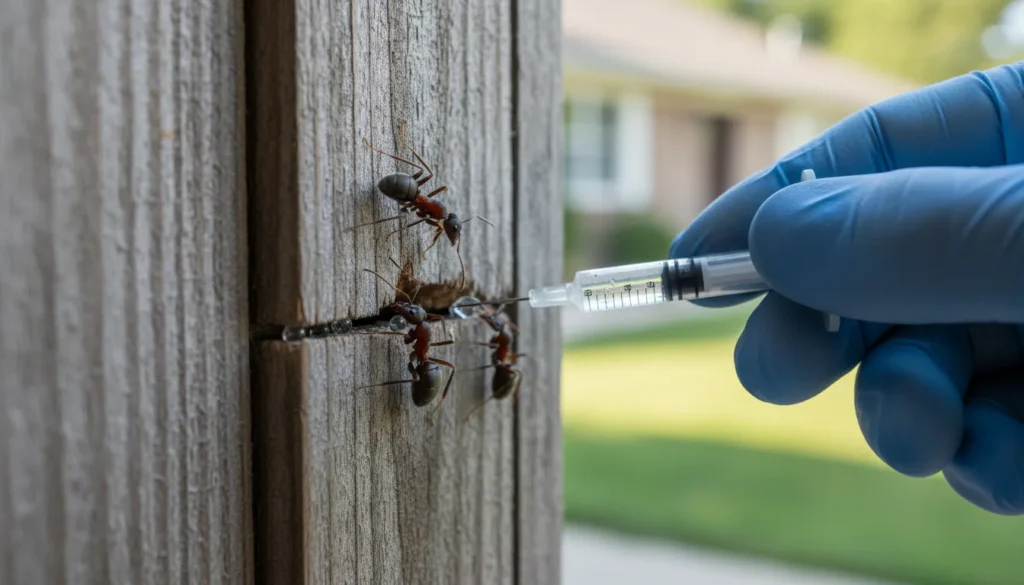
Signs You Need Carpenter Ant Treatment
Carpenter ant infestations often go undetected for months. These insects excavate galleries inside wood without breaking through the surface, so visible damage appears late. Knowing what to look for can save you thousands in structural repairs. If you have found signs of an ant problem, don’t worry – our team can help quickly.
Frass piles near baseboards or window frames:
Carpenter ants don’t eat wood. They bore through it and push the shavings out. These small piles of sawdust-like frass often accumulate below kick-out holes in walls, door frames, and joists near floors and doors. The debris looks like fine wood shavings mixed with insect body fragments. If you find frass along your baseboard or beneath a windowsill, an active colony is tunneling nearby. Track down the sources and contact a professional pest control service.
Winged ants swarming indoors during spring:
Reproductive drones and queens emerge from mature colonies to mate and establish new nesting sites. A swarm inside your home means a parent colony has been living in the structure long enough to produce reproductives. That typically takes three to five years of unchecked infestation. Indoor swarms demand immediate carpenter ant treatment. Don’t rest until the issue is resolved.
Faint rustling sounds inside walls at night:
Carpenter ants are nocturnal. Large colonies produce an audible rustling or crinkling noise as hundreds of workers excavate galleries through structural timber. Press your ear against a suspect wall after dark. If you hear movement, the colony is well established.
Moisture-damaged or decayed wood around the foundation:
Carpenter ants prefer soft, moisture-damaged wood for initial nesting. Rotting sill plates, water-stained crawl space joists, and decayed decking boards attract foraging scouts. Tree branches touching your home provide another way for ants to enter. Once they colonize the wet wood, they expand into sound, dry timber throughout the structure.
Consistent ant trails along the same path each evening:
Worker carpenter ants forage in defined trails guided by pheromone signals. If you see large black ants traveling the same route between dusk and dawn, they’re carrying food back to a colony inside or very near your home. Trail activity that repeats nightly confirms an established infestation that won’t resolve without professional treatment. Tired of dealing with pests coming into your home? Call a professional pest exterminator to start the job right.
Our Carpenter Ant Treatment Process
Carpenter ant treatment at Sterling Pest Control follows a structured, repeatable process designed to eliminate the entire colony and prevent recolonization. We provide comprehensive treatment utilizing advanced solutions to ensure your home remains pest-free.
Comprehensive Inspection
A certified technician inspects the interior and exterior of your property. We check the crawl space, attic, foundation perimeter, wall cavities, and all areas with moisture damage or wood decay. We use a moisture meter to identify high-risk zones and trace visible ant trails to locate entry points and nesting sites. Give us your zip code and we can set up a same-day inspection.
Colony Identification
We determine whether the infestation involves a parent colony, satellite colonies, or both. Identifying the colony structure dictates product selection and application method. We document our findings in a written inspection report.
Targeted Treatment Application
Our technician applies non-repellent insecticide to gallery systems, voids, and harborage areas using injection rods and professional dusters. We place bait gel near active foraging trails and install bait stations at strategic points around the perimeter. We may also spray targeted areas and set baits near ant nest locations. Crack and crevice treatments seal off high-traffic entry points.
Exclusion and Moisture Correction
We use caulk and sealant to block entry points. We recommend dehumidifier installation, improved ventilation, or moisture barrier upgrades where conditions favor reinfestation. Removing the moisture source removes the attraction. We also eliminate moisture sources and fix any leaks that may attract pests.
Monitoring and Follow-Up
Scheduled return visits confirm colony elimination. We re-inspect bait stations, check treated areas for new frass, and apply supplemental treatments if any activity persists. Your service contract outlines the full follow-up schedule and warranty terms. Trust our team to maintain a pest-free environment so your business remains protected.
Brands We Use
Carpenter ant treatment requires commercial-grade products that outperform retail options in both efficacy and residual control. Sterling Pest Control selects only trusted, EPA-registered brands with proven field results against wood-destroying ants.






Every product we apply meets EPA label requirements. Our technicians wear respirators, gloves, and full protective equipment during application.
Other Services
Carpenter ant treatment
Carpenter ant extermination
Wood-destroying ant removal
Carpenter ant control
Carpenter ant elimination
Black ant colony treatment
Carpenter ant inspection
Carpenter ant damage assessment
Ant infestation in walls
Carpenter ant pest control
Professional carpenter ant service
Frass and gallery repair
Carpenter ant removal
Carpenter ant fumigation
Satellite colony extermination
Bed bugs treatment
Rodent control
Rodents removal
FAQs About Carpenter Ant Treatment
What does carpenter ant treatment involve?
Carpenter ant treatment involves a full property inspection, colony identification, targeted insecticide application, exclusion work, and scheduled follow-up monitoring. Technicians inject non-repellent products into nesting sites, apply bait gel along foraging trails, and treat entry points with residual barrier formulations. The goal is total colony elimination, including the queen. We provide comprehensive treatment to ensure your ant problem is resolved.
When is the best time to treat for carpenter ants?
Spring and early summer are peak activity periods when colonies swarm and foraging intensifies. Treating during these months intercepts the colony at its most active and exposed state. Sterling Pest Control also performs carpenter ant treatment year-round because satellite colonies remain active inside heated structures through winter. Contact us any day to have a professional inspect your property.
Why are carpenter ants destructive to homes?
Carpenter ants excavate galleries and tunnels through wood to build nesting sites. They don’t eat the wood – they remove it. Over time, this boring weakens joists, sill plates, subfloor material, and structural timber. Left untreated, a mature colony can compromise the structural integrity of load-bearing components. Unlike termites that feed on wood, carpenter ants simply carve out space for their nest.
How long does carpenter ant treatment take to work?
Most infestations show a significant reduction in activity within two to three weeks. Non-repellent insecticides and bait formulations work through delayed transfer, meaning foraging workers carry the product back to the colony before it takes effect. Full colony elimination, including the queen and brood, typically occurs within four to six weeks. Our ant-killing solutions are designed for long-lasting results.
Can carpenter ants return after treatment?
Reinfestation can occur if moisture conditions persist or new entry points open up. That’s why Sterling Pest Control includes exclusion work and follow-up inspections with every service contract. Sealing cracks, correcting moisture problems, and monitoring bait stations prevent infestations from returning. We help you avoid leaving food out, remove food sources, store food in sealed containers, and take other measures to keep pests from coming back.
Does carpenter ant treatment affect pets or children?
We select low-toxicity, non-repellent formulations and apply them in targeted locations – inside wall voids, behind baseboards, and within sealed bait stations. Our technicians follow all EPA label guidelines and safety data sheet protocols. We’ll walk you through specific precautions before any application begins. Your family’s health is our top priority, and we focus on solutions that keep everyone safe.
Do natural remedies work for carpenter ants?
Some homeowners try natural solutions like vinegar, lemon juice, or essential oils such as peppermint, tea tree, and eucalyptus oils to repel ants. You can spray lemon juice or use peppermint oil near ant trails, or mix equal parts vinegar and water to wipe down surfaces. While these natural sprays may deter foraging workers temporarily due to their acidic property or strong scent, they cannot eliminate the nest or kill the queen. Borax mixed with sugar in a 1:1 ratio can be used as a DIY ant bait, but store-bought baits from stores are rarely strong enough for established carpenter ant colonies. For serious infestations, call a professional pest control service.
When should I call a professional pest control company?
If you have tried DIY methods and are still dealing with carpenter ants, or if you need service for a large infestation, contact Sterling Pest Control for a free quote. Our top-notch expert ant exterminators can help you change the situation fast. We offer same-day appointments and provide a no-obligation assessment. Enter your zip code on our website or give us a call to get started. We are very focused on delivering results you can trust, so you can let go of the worry and rest easy knowing your pest issue will be resolved.
Ready to Get Rid of Pests?
Contact Sterling Pest Control today for a free inspection and estimate. Our expert team is standing by 24/7 to help protect your home.