
Carpenter Bee Treatment
Professional carpenter bee treatment from dedicated pest control professionals who help protect your wooden structures from wood-boring damage and recurring infestations
(855) 813-5412
5 Highlights on Carpenter Bee Treatment
Targeted gallery treatment
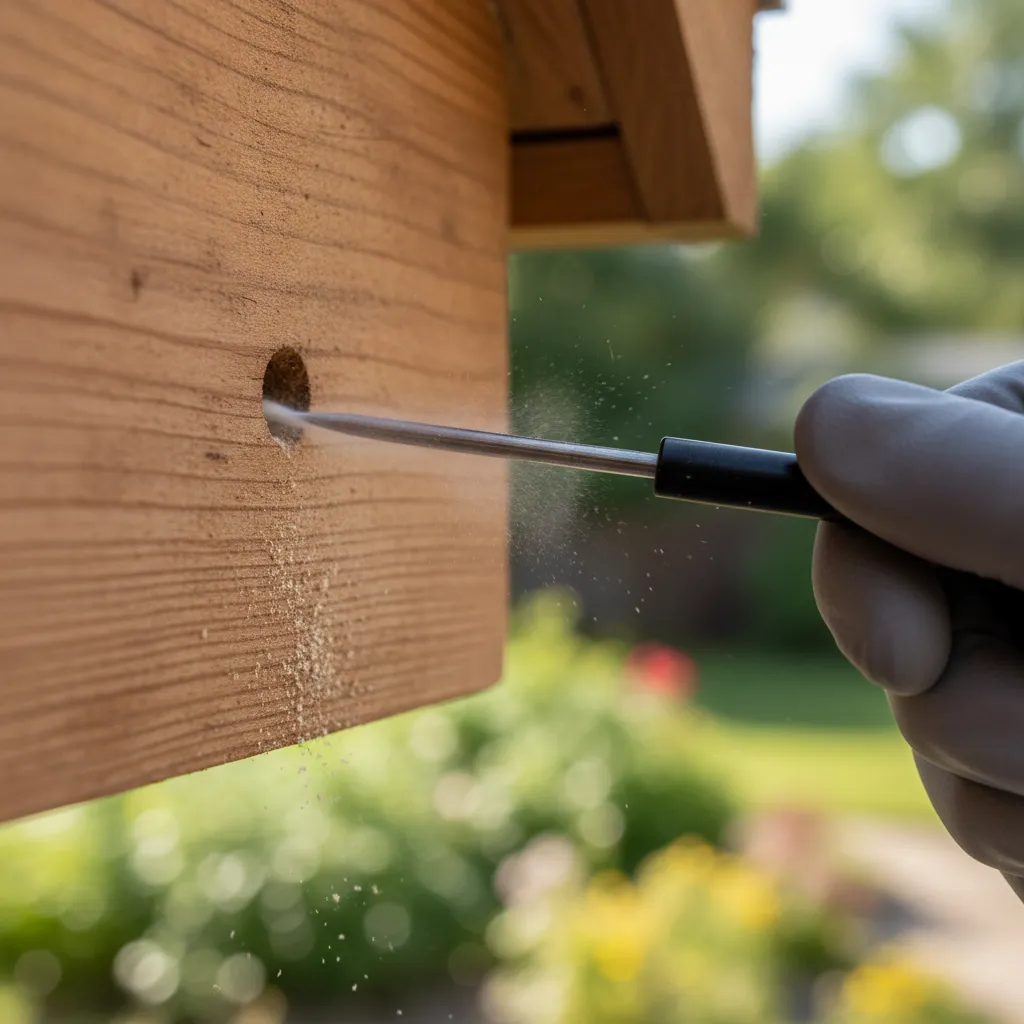
Our technicians drill into active carpenter bee tunnels and inject insecticidal dusts directly into bore holes, brood cells, and egg chambers where larvae pupate and adult females build nests. These wood-boring insects are handled with precision at every stage.
Structural damage prevention
Carpenter bee treatment stops Xylocopa species before they excavate extensive galleries through fascia boards, eaves, deck railings, rafters, and pergolas on your property, protecting every building and wooden structure from damage.
Residual spray application
We apply a professional grade pyrethroid residual spray to all exposed bare wood, unpainted trim boards, and weathered softwood surfaces where female carpenter bees forage for nesting sites.
Exclusion and sealing
After we treat each bore hole, our crew plugs entry points with steel wool and wood putty, then seals the surface with caulking to prevent recurring infestations in the same galleries. Each opening is filled and secured.
Seasonal monitoring program
Sterling Pest Control offers a recurring carpenter bee treatment plan with spring and summer inspections timed to when solitary bees emerge from overwintering dormancy and begin boring into wooden structures. Our monitoring approach is used to maintain long-term protection.
Why Choose Our Carpenter Bee Treatment
Carpenter bee treatment is a specialized service that demands knowledge of Xylocopa biology, structural wood assessment, and precise pesticide application. Sterling Pest Control is a trusted pest control company that has built a strong reputation in this exact discipline. We take pride in the control services we provide.
Our licensed technicians are trained to distinguish carpenter bee activity from other wood-boring insect damage, including beetles and termite infestations. They know how to handle the difference between fresh frass beneath a bore hole and old sawdust from a previous season. That distinction matters. It determines whether your property needs active treatment or preventive exclusion work.
We carry full commercial liability coverage and back every carpenter bee treatment with a written service contract. If carpenter bees return to treated areas within the warranty period, we retreat at no charge. That guarantee reflects our confidence in the products and methods we use.
Sterling Pest Control follows integrated pest management principles on every job. We don’t just spray and walk away. Our team inspects every wooden structure on the property, identifies active and dormant galleries, treats infested areas with the appropriate insecticide formulation, and seals each bore hole. We then document everything in a detailed inspection report and clear treatment plan you can reference year after year to address any concerns.
Our dedicated pest control operators hold state certifications and complete annual continuing education in entomology and chemical safety. You’re getting qualified, expert service from a professional team that treats a wide range of carpenter bee infestations every single week during peak season.
Signs You Need Carpenter Bee Treatment
Carpenter bee treatment becomes necessary when you notice specific indicators of active boring and nesting on your property. Here are five signs that tell you it’s time to call Sterling Pest Control.
Perfectly round bore holes in wood surfaces:
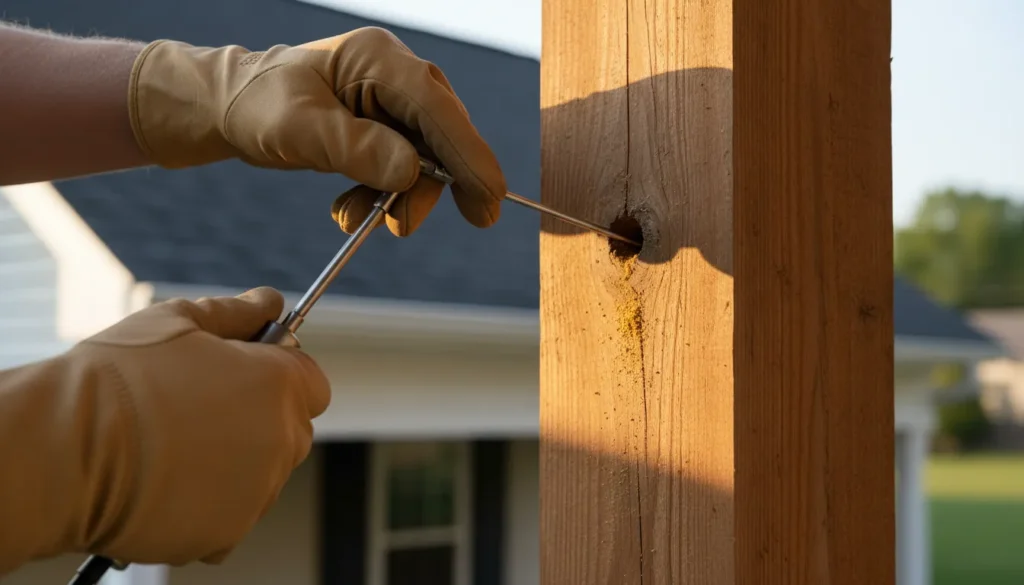
Female carpenter bees drill nearly perfect half inch diameter holes into bare or unpainted wood where there is no paint or stain protection. You’ll find these entry points on fascia boards, soffits, trim boards, fence posts, and the underside of deck railings. One hole means one active gallery. Multiple holes across a structure signal a persistent, established population.
Sawdust piles beneath wooden structures:
Fresh frass accumulates directly below active bore holes. This coarse sawdust is the material the female carpenter bee excavates with her mandibles as she tunnels deeper into the wood to create brood cells. If the frass is light in color and powdery, the boring is recent.
Large bees hovering near eaves and decks:
Male carpenter bees are territorial. They hover aggressively near nest sites, create a loud buzzing noise, and dive at anything that approaches. Unlike bumble bees, carpenter bees have shiny black abdomens rather than fuzzy ones. Males can’t sting, but their presence confirms an active nesting area that needs treatment.
Woodpecker damage on siding and trim:
Woodpeckers detect carpenter bee larvae that live inside galleries and peck through the wood to reach them. If you see irregular, destructive holes alongside smooth round bore holes, woodpeckers are compounding the structural damage carpenter bees started.
Yellow-brown staining below entry hole:
Carpenter bee excrement leaves visible stains on wood surfaces beneath active galleries. These streaks run downward from the bore hole and darken over time. Staining combined with frass deposits confirms you need professional carpenter bee treatment before the infestation spreads to adjacent wooden structures.
Our Carpenter Bee Treatment Process
Carpenter bee treatment at Sterling Pest Control follows a systematic, step by step process designed to eliminate active infestations and prevent future boring activity.
Inspection
A certified technician inspects every wooden structure on your property. We check fascia, eaves, soffits, deck boards, pergolas, rafters, siding, and fence posts for bore holes, frass, staining, and hovering bee activity. We document each finding in a written inspection report.
Dust application
Using a professional duster with an extension pole and narrow nozzle, we inject insecticidal dust deep into each active gallery and tunnel. Our technicians wear protective equipment including a dust mask during application. The dust coats the interior walls of the bore hole, the brood cells, and any larvae or pupae inside, trapping them within. This residual treatment kills adult bees returning to the nest and eliminates the next generation before they emerge.
Residual spray treatment
We apply a liquid pyrethroid spray to all vulnerable wood surfaces. This creates a chemical barrier using professional-grade chemicals that deters female carpenter bees from boring new holes in treated areas throughout the active season, helping you avoid future infestations.
Sealing and exclusion
After the dust has had time to work, we plug each bore hole with steel wool or screening, fill it with wood putty, and seal the surface with caulk. Once the bee nest is removed and sealed, this exclusion method blocks re-entry and protects the treated gallery from moisture damage.
Follow up and monitoring
We schedule a follow up inspection to confirm the treatment eliminated all activity. Our team checks for new bore holes, retreats if needed, and recommends habitat modification steps like painting or staining bare wood to reduce future risk and help prevent areas from becoming vulnerable again.
Brands We Use
Carpenter bee treatment requires professional grade products formulated specifically for wood-boring insect control. Sterling Pest Control uses only EPA registered brands with proven efficacy against Xylocopa species.









Our commitment to safe, responsible pesticide use protects your family, your pets, and the beneficial pollinators on your property while delivering lethal control inside active carpenter bee galleries.
Other Services
Carpenter bee treatment
Carpenter bee extermination
Wood boring bee control
Carpenter bee removal
Carpenter bee elimination
Xylocopa nest treatment
Carpenter bee spray
Carpenter bee pesticide application
Residual insecticide for bees
Carpenter bee inspection
Carpenter bee damage assessment
Bore hole detection service
Carpenter bee prevention
Carpenter bee exclusion service
Seal and plug wood galleries
Carpenter bee trapping
Carpenter bee trap installation
Wood boring bee nest removal
FAQs About Carpenter Bee Treatment
What is carpenter bee treatment?
Carpenter bee treatment is a professional pest control service offered by a licensed company to eliminate active Xylocopa infestations in wooden structures. Our control services involve injecting insecticidal dust into bore holes and galleries to trap and kill the insects, applying residual spray to vulnerable wood surfaces, and sealing entry points with steel wool, wood putty, and caulk to prevent re-entry.
When should I schedule carpenter bee treatment?
The best time is early spring, right when adult carpenter bees emerge from overwintering dormancy after spending winter inside galleries and begin boring new tunnels. Treating in April or May targets active females before they lay eggs in brood cells. A second treatment in late summer catches newly emerged adults from the current season’s pupal cycle.
Why do carpenter bees keep coming back every year?
Female carpenter bees return to existing galleries and bore new tunnels near old ones. Untreated bore holes act as attractants for the next generation. Without professional treatment that includes dust application, residual spray, and physical exclusion properly handled by experts, the same wooden structures will get infested season after season.
How long does a carpenter bee treatment last?
A single professional treatment provides residual protection for several months. The insecticidal dust inside sealed galleries remains active and lethal for up to six months. The exterior residual spray typically lasts through one full active season. Annual retreatment keeps populations controlled long term.
Can carpenter bees cause serious structural damage?
Yes. A single female excavates a tunnel six to ten inches deep. Over multiple seasons, galleries branch and extend through rafters, fascia, and deck joists. Woodpecker activity compounds the damage as they seek larvae as a food source. Left untreated, carpenter bee galleries weaken load bearing wood and create entry points for moisture, wood decay fungi, and secondary pests like ant colonies.
Does Sterling Pest Control offer a warranty on carpenter bee treatment?
We do. Every carpenter bee treatment comes with a written warranty and service contract. You can review all the details on our warranty page. If carpenter bees return to treated and sealed areas during the coverage period, we retreat the affected structures at no additional cost.
Ready to Get Rid of Pests?
Contact Sterling Pest Control today for a free inspection and estimate. Our expert team is standing by 24/7 to help protect your home.