
Bee Removal & Relocation
Professional bee removal and relocation services that safely extract colonies from your property while preserving these beneficial pollinators
(855) 813-5412
5 Highlights on Bee Removal & Relocation
Humane live extraction
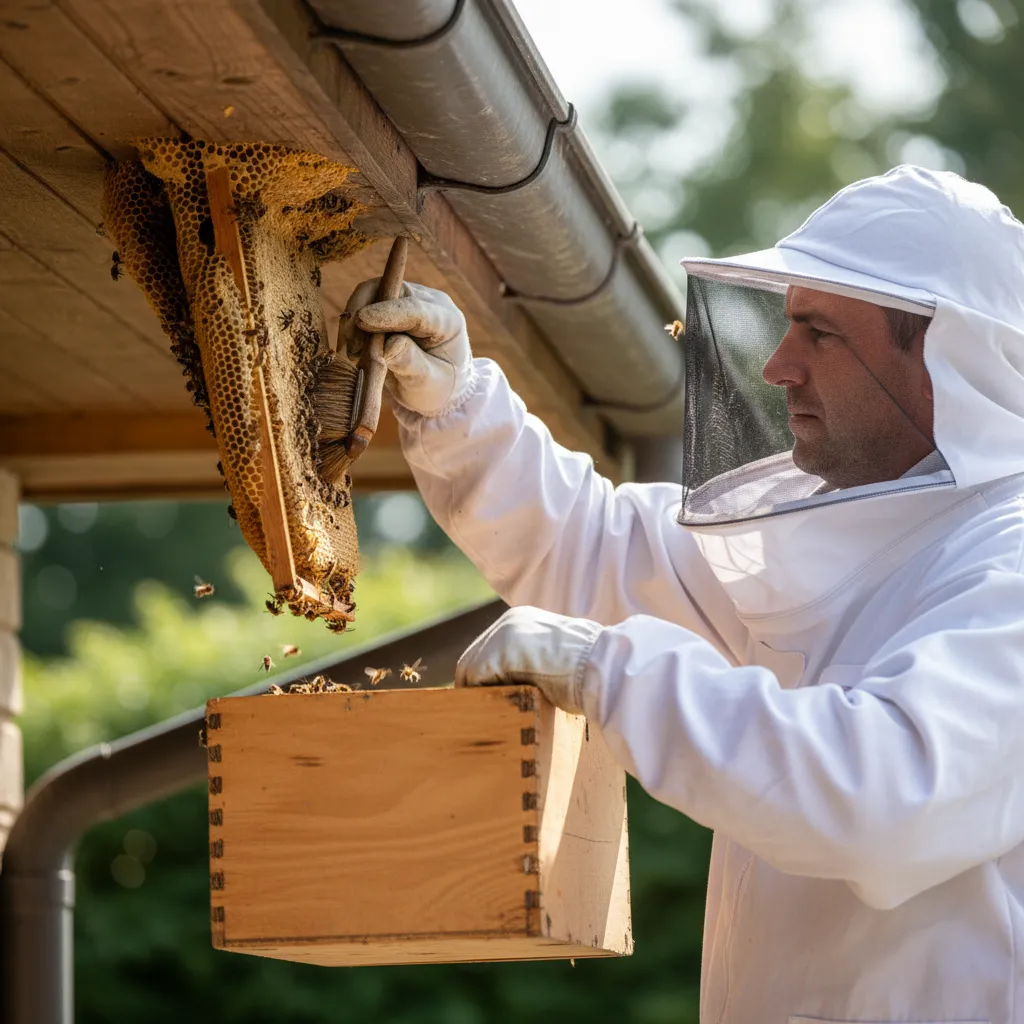
Our certified technicians use specialized bee vacuums and smokers to capture entire colonies, including the queen bee, worker bees, and brood, without lethal pesticides. Every hive gets relocated to a licensed apiary or pollinator sanctuary.
Same day swarm response
Bee swarms move fast. Sterling Pest Control dispatches a licensed inspector within hours to assess the situation, contain the colony, and prevent bees from establishing a permanent hive inside your wall voids, eaves, or crawl spaces.
Full honeycomb removal
Removing bees without extracting the honeycomb invites reinfestation. We pull every piece of comb, beeswax, and propolis from the structure, then seal entry points with professional exclusion materials to deter future colonies.
Residential and commercial service
We offer year-round bee removal and relocation for homes, warehouses, schools, and commercial buildings of any type. Our team carries full protective equipment and follows all Environmental Protection Agency guidelines for safe colony management to meet your needs.
Guaranteed follow up
Each bee removal and relocation job includes a detailed inspection report, a service warranty, and a scheduled follow up visit to confirm the colony hasn’t returned and all exclusion barriers remain intact.
Why Choose Our Bee Removal & Relocation
Bee removal and relocation is a specialized discipline that demands more than standard pest control training. Sterling Pest Control employs licensed, insured, and trained technicians who’ve completed advanced coursework in live bee extraction, colony behavior, and structural repair. We don’t just spray and walk away. We deliver results and relocate.
Our approach prioritizes the ecosystem. Honeybees and bumblebees pollinate roughly one third of the food supply. Killing them creates downstream problems. Sterling’s bee removal and relocation program captures colonies intact and transfers them to partnered beekeepers and apiaries where they continue pollinating crops and producing honey.
We carry full liability coverage for every bee removal and relocation job. Our technicians wear professional bee suits, veils, and gloves while operating commercial grade bee vacuums and smokers designed to calm aggressive or Africanized colonies without harming the brood.
Sterling Pest Control backs every relocation with a written warranty. If bees recolonize the same entry point within 90 days, we return at no charge to re-treat, reseal, and relocate again. That guarantee applies to residential and commercial properties alike.
You won’t find a more qualified team in the region. Our pest control operators hold active state licenses, maintain ongoing Integrated Pest Management certifications, and stay current on all EPA regulations governing pollinator protection. We provide the best service to keep our customers satisfied. Trusted, professional, and thorough – that’s the Sterling standard for bee removal and relocation.
Signs You Need Bee Removal & Relocation
Bee removal and relocation is necessary when a colony establishes itself in or near a structure where people live, work, or gather. Here are five signs you need professional service now.
Visible swarm clustering on your property:
A swarm is a ball of thousands of bees hanging from trees, fence posts, or building overhangs. This mass of scout bees, drones, and a queen bee is actively searching for a permanent nesting site. If you spot a swarm, it can move into your house, attic, or wall void within 24 hours and may spread to neighboring properties. A qualified technician can capture and relocate the swarm before it settles.
Bees entering and exiting a gap in your structure:
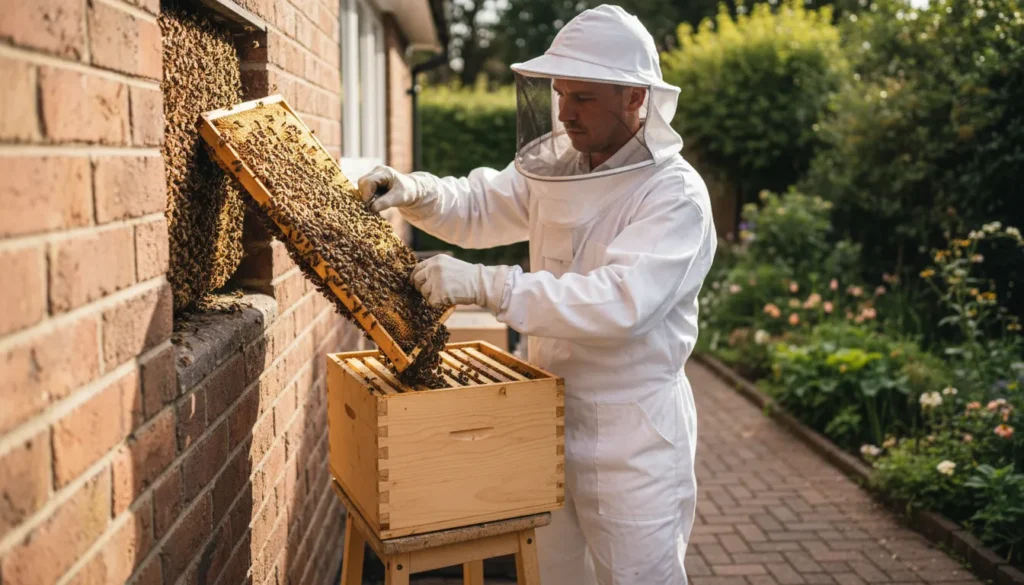
Steady bee traffic flowing through a crevice in your eave, foundation, or siding means a colony has already moved in. Worker bees forage during the day and return to the hive at dusk. That gap is their entry point, and behind it sits a growing honeycomb filled with brood, beeswax, and stored honey.
Buzzing sounds inside walls or ceilings:
A persistent hum behind drywall signals an active hive. Colonies can grow to 50,000 or more bees inside a wall void. The longer you wait, the larger the honeycomb becomes, and the more structural damage you’ll face during extraction.
Dark staining or honey seeping through interior surfaces:
When a hive expands in warm weather, honeycomb melts and honey leaks through drywall, stucco, or wood paneling. These stains attract ants, beetles, and rodents. Bee removal and relocation paired with full comb extraction is the only lasting fix.
Increased stinging incidents near your home or business:
Africanized bee colonies and ground nesting yellow jackets become aggressive when their territory is disturbed. Children, pets, and employees face real danger. If anyone on your property has been stung multiple times in a short period, contact Sterling Pest Control immediately for an emergency assessment and safe colony relocation.
Our Bee Removal & Relocation Process
Bee removal and relocation is a structured, multi step process that Sterling Pest Control performs the same way every time. Consistency protects both the bees and your property.
Inspection and identification
A licensed inspector arrives on site to view the property, identify the bee species, locate the colony, and assess the scope of the infestation. We determine whether you’re dealing with honeybees, bumblebees, yellow jackets, wasps, or hornets. Species identification dictates the removal method. Our team will access all areas necessary to resolve the issue.
Containment and calming
Our technician suits up in full protective equipment and applies smoke from a professional bee smoker to calm the colony. Smoke disrupts pheromone communication and reduces aggressive behavior, making live extraction safer for everyone.
Live extraction
Using a commercial bee vacuum set to low suction, we carefully capture worker bees, drones, and the queen bee without crushing them. The entire colony goes into a ventilated transport box designed for safe relocation.
Honeycomb and hive removal
We open the wall void, eave, or cavity and remove all honeycomb, beeswax, propolis, and brood. Leaving comb behind attracts new swarms and secondary pests like wax moths and beetles.
Exclusion and sealing
Our team seals every entry point with caulk, screen, or exclusion devices. We sanitize the cavity to eliminate residual pheromones that could attract future colonies.
Relocation and follow up
The captured colony travels to a partnered beekeeper or apiary sanctuary. Sterling schedules a follow up inspection within 30 days to confirm the exclusion holds and no new bee activity has started.
Brands We Use
Sterling Pest Control uses only professional grade products from these trusted brands:








Every product we apply meets EPA safety standards. Our bee removal and relocation process uses non toxic, pesticide free methods whenever possible.
Other Services
Bee removal and relocation
Live bee removal service
Honeybee colony extraction
Bee hive removal
Bee nest removal near me
Professional bee extractor
Bee swarm removal
Emergency bee removal
Humane bee capture and relocation
Bee removal service
Bee removal company near me
Africanized bee colony removal
Bee relocation specialist
Bee removal and exclusion
Structural honeycomb removal
FAQs About Bee Removal & Relocation
What is bee removal and relocation?
Bee removal and relocation is the process of safely extracting a live bee colony from a structure or property and transporting it to an apiary, beekeeper, or pollinator sanctuary. Sterling Pest Control performs this service using specialized bee vacuums, smokers, and protective equipment to capture the queen bee, worker bees, drones, and brood without killing them.
When should I call for bee removal and relocation?
Call as soon as you notice a swarm, steady bee traffic entering your structure, buzzing inside walls, or honey stains on interior surfaces. Early intervention prevents the colony from expanding and reduces the cost and complexity of extraction. Bee activity peaks during spring and summer breeding season. Take action now – call us by phone to learn more about our services and schedule an inspection.
Why relocate bees instead of exterminating them?
Bees are critical pollinators that support agriculture and natural ecosystems. Exterminating a honeybee colony eliminates thousands of beneficial insects and still leaves behind honeycomb that attracts secondary pests. Relocation preserves the colony and solves the structural problem permanently.
How long does a bee removal and relocation job take?
Most residential bee removal and relocation jobs take two to four hours. Large colonies embedded deep in wall voids or attic spaces may require a full day. Sterling Pest Control provides a time estimate during the initial inspection.
Can I remove a bee hive myself?
No. Disturbing a colony without proper training, protective equipment, and a bee vacuum risks mass stinging, especially with aggressive or Africanized bees. A licensed pest control technician has the tools and expertise to extract the colony safely and seal the structure against reinfestation.
Does bee removal and relocation include structural repair?
Sterling Pest Control removes all honeycomb, seals entry points, and sanitizes the cavity. Drywall patching, stucco repair, and cosmetic restoration fall outside our scope, but we’ll recommend trusted contractors who specialize in post removal structural repair.
Ready to Get Rid of Pests?
Contact Sterling Pest Control today for a free inspection and estimate. Our expert team is standing by 24/7 to help protect your home.