
Brown Recluse Spider Treatment
Professional brown recluse spider treatment to help you get rid of infestations and prevent recurrence in your home or business.
(855) 813-5412
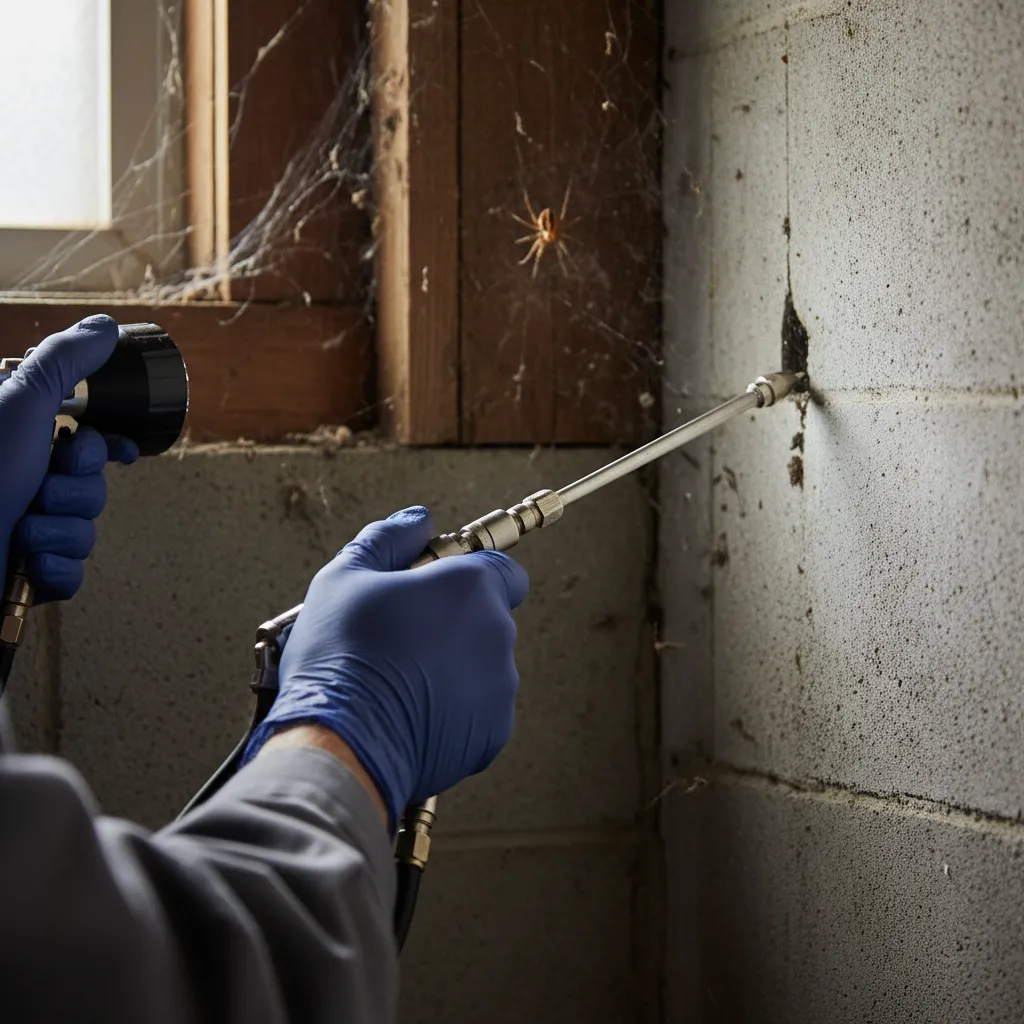
5 Highlights on Brown Recluse Spider Treatment
Targeted Identification and Inspection
Our certified pest control technicians use ultraviolet blacklights and strategically placed glue traps to detect brown recluse spiders (Loxosceles reclusa) in harborage areas like attics, crawl spaces, basements, and closets where these reclusive arachnids lurk undisturbed. These spiders are most active at night, hiding in dark spots during the day, and finding them requires trained expertise.
Residual Barrier Application
We apply professional grade residual sprays containing pyrethroid insecticides such as bifenthrin and deltamethrin along cracks, crevices, and perimeter entry points to eliminate active spiders and kill spiderlings as they emerge from egg sacs.
Integrated Pest Management Approach
Our brown recluse spider treatment follows IPM protocols that use combined strategies including chemical control, exclusion methods, and habitat modification to reduce spider populations below harmful thresholds without relying on a single tactic. We focus on reducing this type of infestation through methods that deliver long-term protection.
Prey Insect Reduction
Brown recluse spiders feed on cockroaches, crickets, silverfish, and firebrats. When these pests are present in your structure or surrounding areas, we treat for them simultaneously, cutting off the food supply that sustains spider colonies inside your property.
Guaranteed Follow Up Service
Every treatment plan includes scheduled follow up visits with monitor trap checks, re-application of insecticidal dust in wall voids, and a written warranty so you know the spider control stays effective and the infestation remains under control.
Why Choose Our Brown Recluse Spider Treatment
Brown recluse spider treatment is a specialized service that demands precise knowledge of spider behavior, venom risks, and structural pest management. When you call Sterling Pest Control, you get licensed, certified pest management professionals who’ve treated hundreds of confirmed brown recluse infestations across residential and commercial properties. Our team understands the health risks these spiders pose, and we want you to learn what makes professional treatment essential.
We don’t guess. We identify. Our technicians distinguish brown recluse spiders from lookalikes by examining the violin-shaped marking on the cephalothorax and confirming the species’ signature six eye arrangement. They look for the tan to brown coloring and the uniform abdomen that sets this spider apart from species often mistaken for it. Accurate identification drives every treatment decision we make.
Our team carries active pest control licenses and maintains ongoing training and learning in arachnid biology, insecticide safety, and EPA regulatory compliance. We select targeted pesticides based on the severity and location of your infestation rather than applying broad spectrum chemicals indiscriminately. Every pesticide used is chosen for its effectiveness and safety profile. That means safer outcomes for your family, your pets, and your property.
Sterling Pest Control backs every brown recluse spider treatment with a service contract and written warranty. If spiders return between scheduled visits, we re-treat at no additional cost. Our inspection reports detail every finding, and our treatment plans outline each step so you understand exactly what we’re doing and why. We want to give you peace of mind, so call or email us today for a free quote.
You get a dedicated technician who knows your property. You get professional grade products unavailable to consumers. You get results from a trusted, top rated pro exterminator that stands behind its work and delivers the best service in the industry.
Signs You Need Brown Recluse Spider Treatment
Brown recluse spider treatment becomes necessary when specific warning signs appear in your home or business. Recognizing these signs early can prevent venomous bites and widespread infestation. If you’re worried about seeing spiders or notice any sign of activity, contact a professional immediately.
Live Spiders in Harborage Areas:
Brown recluse spiders are nocturnal and solitary. Spotting even one inside a closet, garage, basement, or cardboard box during daylight hours often signals a larger population hiding nearby. These spiders retreat into dark, undisturbed spaces and breed in cluttered environments where they go undetected for months. They hide in clutter, inside shoes, folded clothing, bed frames, and bedding that remains undisturbed.
Spider Bites with Necrotic Lesions:
A brown recluse bite can produce a dermonecrotic wound that ulcerates over several days. Brown recluse spider bites cause pain at the bite site that may worsen over time, potentially developing into ulcers. If anyone in your household develops a painful lesion with a central blister surrounded by redness, seek medical attention from a physician immediately and contact a professional exterminator. The spider’s venom contains enzymes that destroy skin tissue, and confirmed bites indicate active spiders in your living space.
Glue Traps Catching Multiple Specimens:
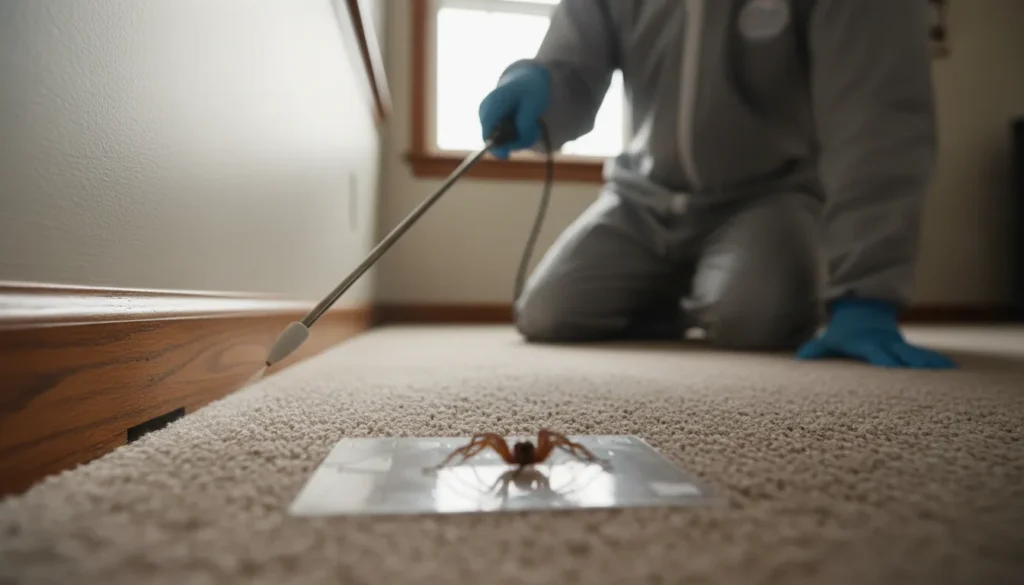
Sticky traps placed along baseboards, behind furniture, and inside crawl spaces serve as reliable monitoring tools. Capturing two or more brown recluse spiders on glue traps within a short period of time confirms an established infestation that requires professional intervention beyond store bought sprays. This problem is difficult to resolve without expert help.
Shed Exoskeletons and Egg Sacs:
Brown recluse spiders molt as they mature, leaving behind translucent exoskeletons in corners, attics, and wall voids. These sheds are often found in any corner or crevice where spiders feel secure. Finding these molts alongside small, round egg sacs wrapped in silk means spiders are actively breeding inside your structure. Each egg sac can contain up to fifty spiderlings. An adult brown recluse is roughly the size of a quarter including its legs.
Prey Insect Activity:
A sudden increase in cockroaches, crickets, earwigs, or silverfish inside your property creates ideal feeding conditions for brown recluse spiders. These predatory arachnids move toward reliable food sources and establish harborage sites near prey insect populations. When prey insects come into your house and enter through gaps in the structure, spiders follow.
Our Brown Recluse Spider Treatment Process
Brown recluse spider treatment at Sterling Pest Control follows a structured, multi step process designed to eradicate existing spiders and prevent reinfestation. The first step is to start with a complete assessment of your property.
Comprehensive Inspection
A certified technician inspects your entire property using a blacklight and visual assessment. We check attics, basements, crawl spaces, closets, garages, woodpiles, lumber stacks, and stored cardboard boxes. Areas we include in our inspection cover debris piles, wood storage, and any location where spiders may harbor. We place monitor traps in suspected harborage zones and document all findings in a detailed inspection report.
Species Identification
We confirm the presence of Loxosceles reclusa by examining captured specimens for the fiddleback marking, six eyes arranged in three pairs, and uniform coloring. We note that this eye arrangement is rare among spiders, and entomologists use this mark as a key identifier. Accurate identification ensures we apply the correct treatment protocol.
Targeted Chemical Application
Our technicians apply residual insecticide sprays along baseboards, cracks, and crevices. We dust wall voids, inside wall cavities, and attic spaces with diatomaceous earth or boric acid. We fog enclosed areas when population density warrants it. We use caution around water sources and sensitive areas. Every product we use carries EPA registration and a current safety data sheet.
Exclusion and Habitat Modification
We seal entry points with caulk and install door sweeps, weather stripping, and vent covers to create an exclusion barrier. We block access points and keep spiders from re-entering. We advise on decluttering storage areas, removing debris, and eliminating harborage sites that attract brown recluse spiders. These steps help you avoid future infestations once sealed.
Follow Up Monitoring and Re-Treatment
Scheduled follow up visits allow us to check trap counts, assess population reduction, and re-apply treatments as needed. We continue monitoring multiple times until trap captures reach zero and your property meets our clearance threshold. Being thorough prevents you from getting another infestation.
Brands We Use
Brown recluse spider treatment requires professional grade products formulated specifically for arachnid control. Sterling Pest Control selects trusted, EPA registered brands proven effective against brown recluse spiders and their prey insects.






All products we apply carry current safety data sheets. Our technicians wear personal protective equipment including gloves and respirators during every application.
Other Services
Brown recluse spider treatment
Brown recluse extermination
Loxosceles reclusa pest control
Brown recluse spider removal
Recluse spider elimination
Venomous spider infestation treatment
Brown recluse pest control
Fiddleback spider treatment
Residential spider exterminator near me
Brown recluse spider exterminator
Brown recluse spider spray service
Necrotic spider bite prevention
Brown recluse spider inspection
Brown recluse spider control service
Integrated pest management for spiders
FAQs About Brown Recluse Spider Treatment
What does brown recluse spider treatment involve?
Brown recluse spider treatment is a multi step process that includes thorough inspection, species identification, targeted insecticide application, exclusion work, and follow up monitoring. Our technicians apply residual sprays, insecticidal dusts, and glue traps to eliminate active spiders while sealing entry points to prevent new ones from entering your property. Vacuuming with a vacuum cleaner can help on your own, but professional treatment is essential.
When should I schedule brown recluse spider treatment?
Schedule treatment as soon as you spot a confirmed brown recluse spider, find shed exoskeletons, or discover egg sacs in your home. Brown recluse spiders are most active from spring through fall, but infestations persist year round in heated structures, and they survive through winter indoors. Watch for activity during cooler months as well. Early treatment prevents populations from growing.
Why are brown recluse spiders dangerous?
Brown recluse spiders carry venom that causes dermonecrotic lesions at the bite site. Unlike web-building spiders, they do not spin elaborate webs but instead create thin, irregular strands. The venom destroys skin tissue and can lead to ulcerative wounds requiring medical debridement or skin grafts. Children, elderly individuals, and immunocompromised people face higher risk of severe allergic reactions.
How long does brown recluse spider treatment take to work?
Residual insecticides begin killing spiders on contact and remain active for several weeks. Most clients see significant population reduction within two to four weeks. Complete eradication of established infestations typically requires two to three treatment cycles with follow up monitoring visits.
Can I treat brown recluse spiders myself?
Store bought sprays rarely reach the deep harborage sites where brown recluse spiders hide. Professional exterminators access wall voids, attic insulation, and crawl spaces with commercial grade dusts and application equipment that consumer products can’t match. We recommend you switch to storing items in sealed plastic bins and leave nothing in cardboard to discourage spiders. A licensed pest management professional delivers faster, safer, and more thorough results.
Does brown recluse spider treatment affect my pets?
Our technicians select products with low mammalian toxicity and apply them in areas pets don’t access, such as wall voids and attic spaces. We’ll instruct you on any brief vacating periods required after fogging or spraying and let you know exactly when treated areas are safe for re-entry. Click the link at the bottom of our service page to schedule your consultation.
Ready to Get Rid of Pests?
Contact Sterling Pest Control today for a free inspection and estimate. Our expert team is standing by 24/7 to help protect your home.